

8 Useful Slot Tips
A practical rundown of volatility, payout ratios, and progressive jackpots for online slot players.
Read Tips
Articles, slot strategies, and casino guides from a multinational team of computer and gambling enthusiasts based in Las Vegas.

Craps is one of the most energetic games in any casino, defined by the clatter of dice and the roar of the table. The version players see today, whether in a high-roller pit or a digital lobby, has been centuries in the making.
The history of craps is a winding road that passes through medieval English taverns, Mississippi riverboats, and the back rooms of outback pubs. It is a story of mathematics, migration, and technology that brought dice to the fingertips of players from Sydney to Perth.
Two dice, a simple layout, and a bet on the next throw remain at the heart of the game, even as venues and players have changed beyond recognition.
In Australia, craps sits between the dominant pokie culture and a long tradition of dice games played in clubs. Understanding where the game came from helps explain why it never took off like blackjack or roulette, and why online craps is now giving it a second wind.
Long before craps had a name, dice were shaping games across civilisations. Knucklebones and carved cubes have been found in Egyptian tombs, and Roman legionaries carried them across the empire. An early form called "hazard" appeared in texts from the late Roman period.
In medieval England, hazard became a tavern staple, played with two dice and rules that could take hours to master. Gamblers in London and Bristol passed their own variations to sailors, who carried the game across the Atlantic.
Hazard's rules were notoriously tricky. A player called the "caster" threw two dice, and the outcome determined whether the "main" or the "chance" won. Bookmakers tracked every result on parchment, and disputes were common.
French colonists simplified hazard in the 17th and 18th centuries, creating a version called "crabes." When the game crossed back to London, it picked up a new name: "craps." In this simplified shape, it arrived in North America with settlers heading to Virginia and Maryland. In the gambling dens of New Orleans, cheating was rampant with loaded dice called "capped" or "miss-out" cubes, setting the stage for the game's biggest rewrite.
A dice maker named John H. Winn is credited with inventing modern craps around 1907. He introduced the "don't pass" bet, letting players wager against the shooter, and fixed the rules so the house edge stayed marginal. The game spread from New Orleans up the Mississippi to St. Louis and Chicago.
The saloon era cemented craps as a social event. During the Second World War, American soldiers played craps in barracks from Brisbane to Berlin. The post-war boom in Las Vegas turned craps into the signature game of the Strip, with "strip rules" offering higher limits and bigger side bets.
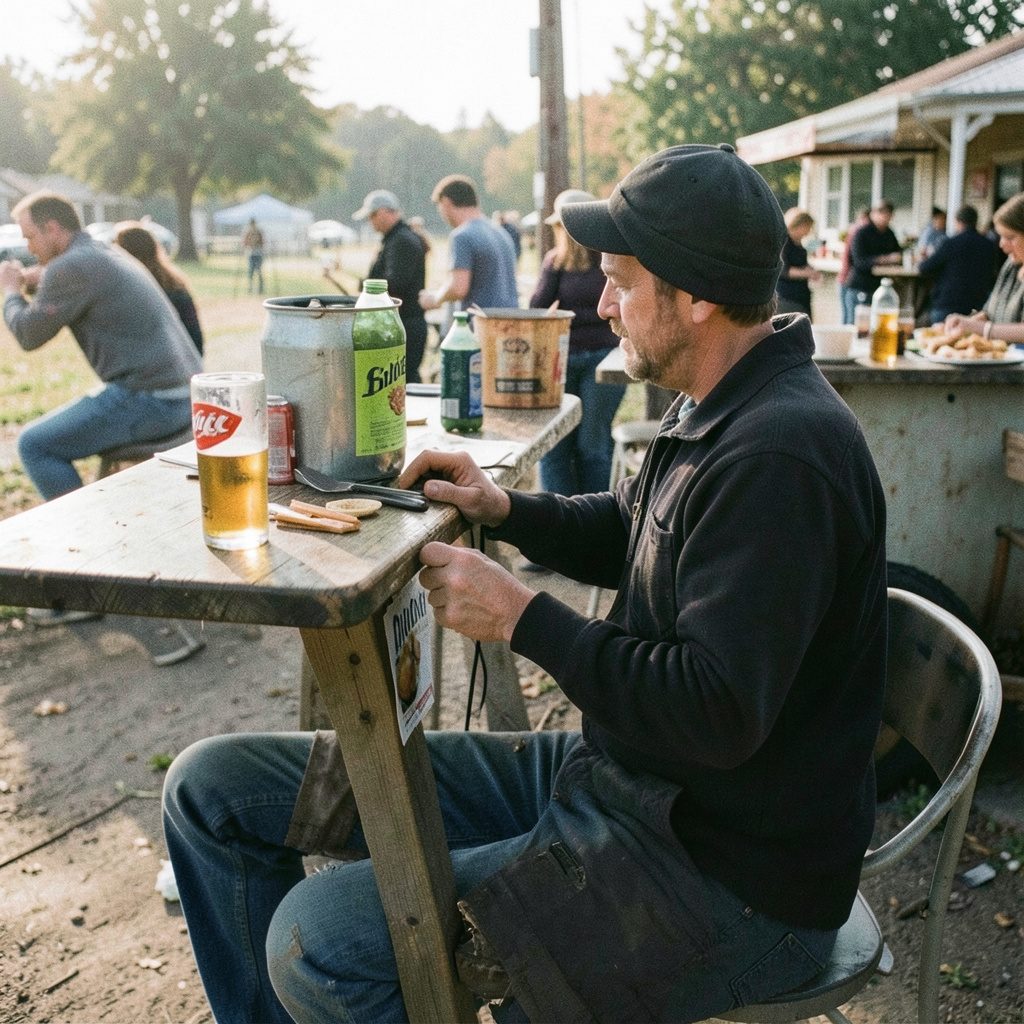
Australia has a complicated relationship with dice. The country is famous for "pokies," the slot machines that fill pubs from Hobart to Darwin, and craps has never held the same cultural grip. Yet dice games have deep roots, played in 19th-century goldfields pubs and shearing sheds. Men would throw two dice on the back of a swag to settle who bought the next round.
Crown Melbourne, which opened in 1997, offers craps in a quieter corner of the gaming floor. Crown Perth and The Star in Sydney also run tables, with local dealers mixing American patter with Australian slang. A "natural" might be cheered with "good on ya," and a seven-out can draw "no worries, mate, next round." The Australian Communications and Media Authority oversees online advertising, while state bodies regulate land-based venues, keeping the scene small but carefully controlled.
| Era / Style | Where It Played | Key Features | House Edge on Pass Line |
|---|---|---|---|
| Medieval Hazard | English and French taverns | Complex rules, multiple side bets | Varies, often 5%+ |
| Early American Craps | New Orleans gambling dens | "Don't pass" added by John Winn | ~1.41% |
| Strip-Style Casino Craps | Las Vegas, Crown Melbourne, The Star Sydney | High limits, prop bets, hot atmosphere | ~1.41% with optimal play |
| Online Craps | Licensed digital platforms | RNG dice or live dealer streams, tutorials | ~1.41% on main bets |
| Mobile Live-Dealer Craps | Smartphone and tablet apps | Real dice, real croupier, chat functions | ~1.41% with standard rules |
The pass line and don't pass bets sit at the heart of craps, with a house edge of roughly 1.41 percent on the pass line and 1.36 percent on the don't pass. These are some of the best odds in any casino, which is why experienced players avoid flashier side bets that can carry edges of 10 percent or more.
The dice have 36 combinations but only 11 distinct totals. Seven is the most likely result, with six ways to make it. This is why "seven out" ends a round. Understanding these frequencies is the key to seeing craps as probability, not luck. The same thinking applies to sports betting, and readers who want to sharpen their approach can learn more about spotting value bets in football accumulators.
The first online casinos appeared in the mid-1990s, and craps was one of the earliest games adapted. Early versions used random number generators, which drew criticism from purists. Live-dealer technology, streamed from Malta and the Philippines, has closed that gap with real croupiers throwing real dice.
Modern online craps offers something land-based casinos rarely do: the ability to learn at your own pace. For Australians, this is valuable, as few venues offer low-stakes games during weekday arvos. Providers like Evolution and Pragmatic Play have released dozens of variants, and a closer look at how slot machines work shows how much the underlying technology has changed.
Craps has come a long way from medieval taverns and colonial goldfields. It has survived wars and the rise of pokies to remain one of the most exciting games in any casino lobby. The digital era has given it new life, with online platforms making the game accessible to anyone with a smartphone.
For Australian players, the best path is to start with free-play tables, then move to live-dealer games. Stick to pass and don't pass bets, manage your bankroll, and remember the real opponent is the house edge. The MrGamer team is keen to hear your stories and tips, so drop us a line through the contact page and tell us where you roll the dice.
A practical rundown of volatility, payout ratios, and progressive jackpots for online slot players.
Read TipsGuides covering the best online card games, with strategy notes from our team.
See GamesSuperstition, luck, and common misconceptions checked against real casino math.
Read Articles